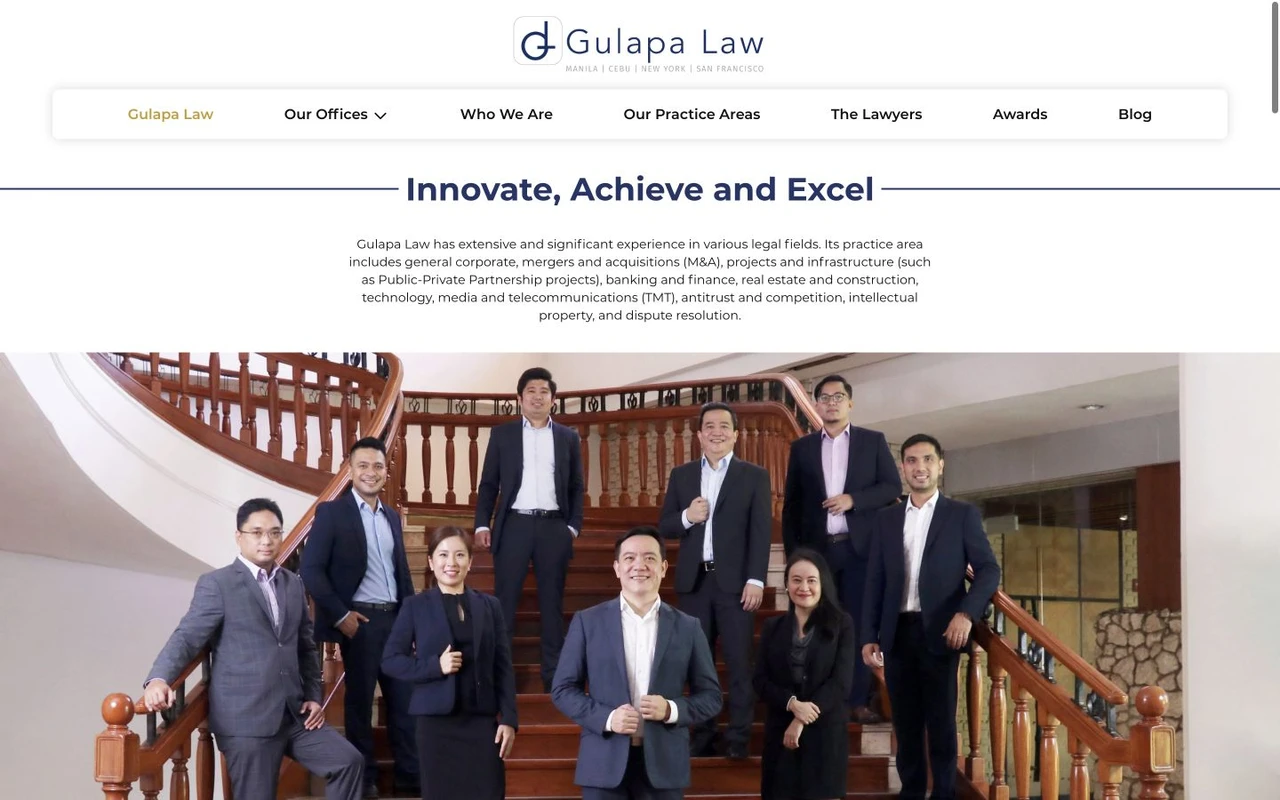
A website for a law firm serving clients in the Philippines and abroad. Practice areas, lawyer profiles and office information give visitors several clear ways to explore the firm.
The brief
A broad legal practice needs to communicate its expertise without making visitors work through an undifferentiated list of services.
Explore the complete design.
Move through the design, from the first impression to the final detail. Drag the page control or scroll inside a preview.
Design decisions
Structure around the questions a prospective client brings.
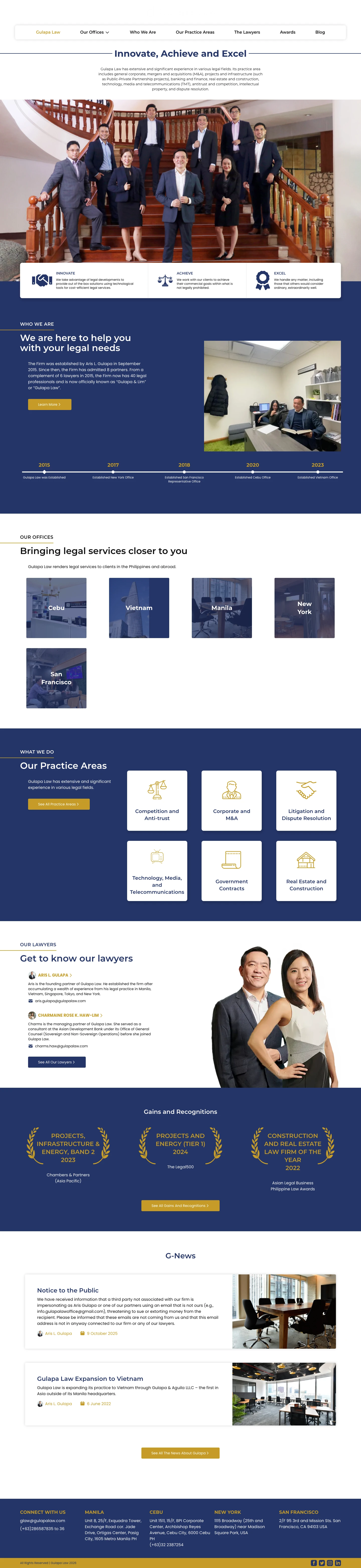
The experience separates what the firm does, who delivers the work and where clients can reach it. Practice-area content and lawyer profiles provide depth while the main navigation keeps those routes visible.
- Practice areas grouped for straightforward discovery.
- Lawyer profiles that put people beside the firm’s expertise.
- Office information for local and international enquiries.
Across devices
A clear route to the right information.
On smaller screens, the priority is readable practice information and straightforward access to the firm’s people and offices.
The thinking behind the work
Make a firm’s breadth easier to navigate.
For Gulapa Law, the website brings practice information, professional profiles and office details into a public reference. The business purpose is to help a prospective client understand the firm and identify a relevant conversation.
Relevant enquiries
Help visitors start with the service they need.
A firm with several practice areas serves visitors with different questions. The website gives those areas separate places in its service presentation, allowing readers to begin with the subject closest to their needs. This is a more useful starting point than expecting every prospective client to interpret a single broad description of the firm.
Practice information helps the visitor prepare before making contact. From a business perspective, that creates an opportunity for better-focused enquiries because the person has already explored the firm’s scope. The design supports that preparation; it does not attempt to replace the professional discussion needed to establish whether the firm can assist with a particular matter.
Professional authority
Connect expertise with identifiable people.
Lawyer profiles place the professionals alongside the practice information. The website also presents the firm’s offices and published recognition, giving visitors several ways to understand its public presence. Bringing these elements together makes the firm easier to assess than a page concerned only with listing services.
The purpose of this content is to provide context for trust. A prospective client can identify the people and locations behind the organisation, then decide what to explore next. Professional credibility is supported by accessible, specific information about the firm rather than by visual polish alone.
Ease of use
Support different routes into the same firm.
Some visitors arrive looking for a practice area; others already know a lawyer’s name or want information about an office. The website exposes those routes through its navigation and content sections. Each route reflects a different starting point without requiring a separate website for every audience.
The mobile presentation carries those core subjects into a narrower reading format. Keeping practice information, profiles and contact details available together supports research that may begin on a phone and continue later. The commercial role of the website is to remain a clear reference throughout that process and help the visitor reach the appropriate next conversation.
The experience in practice
From a specific need to a firm enquiry.
Find the relevant area
Explore the practice information that matches your question.
Understand the firm
Review the people, offices and professional context.
Make an enquiry
Use the contact information to discuss the matter directly.