01 About the project
The West Perth architecture concept turns a broad portfolio into a structured project register. Visitors can compare sectors, roles, dates and project information, then switch to a photographic view.
An independent redesign concept exploring a possible direction for this business. This is a design study, with no verified client outcomes reported.
Explore website concept (opens in a new tab)The design challenge
Let professional buyers review the practice’s experience without opening every project individually.
A different direction.
Move through the design, from the first impression to the final detail. Drag the page control or scroll inside a preview.
The original is a homepage reference. Explore the concept in full alongside it.
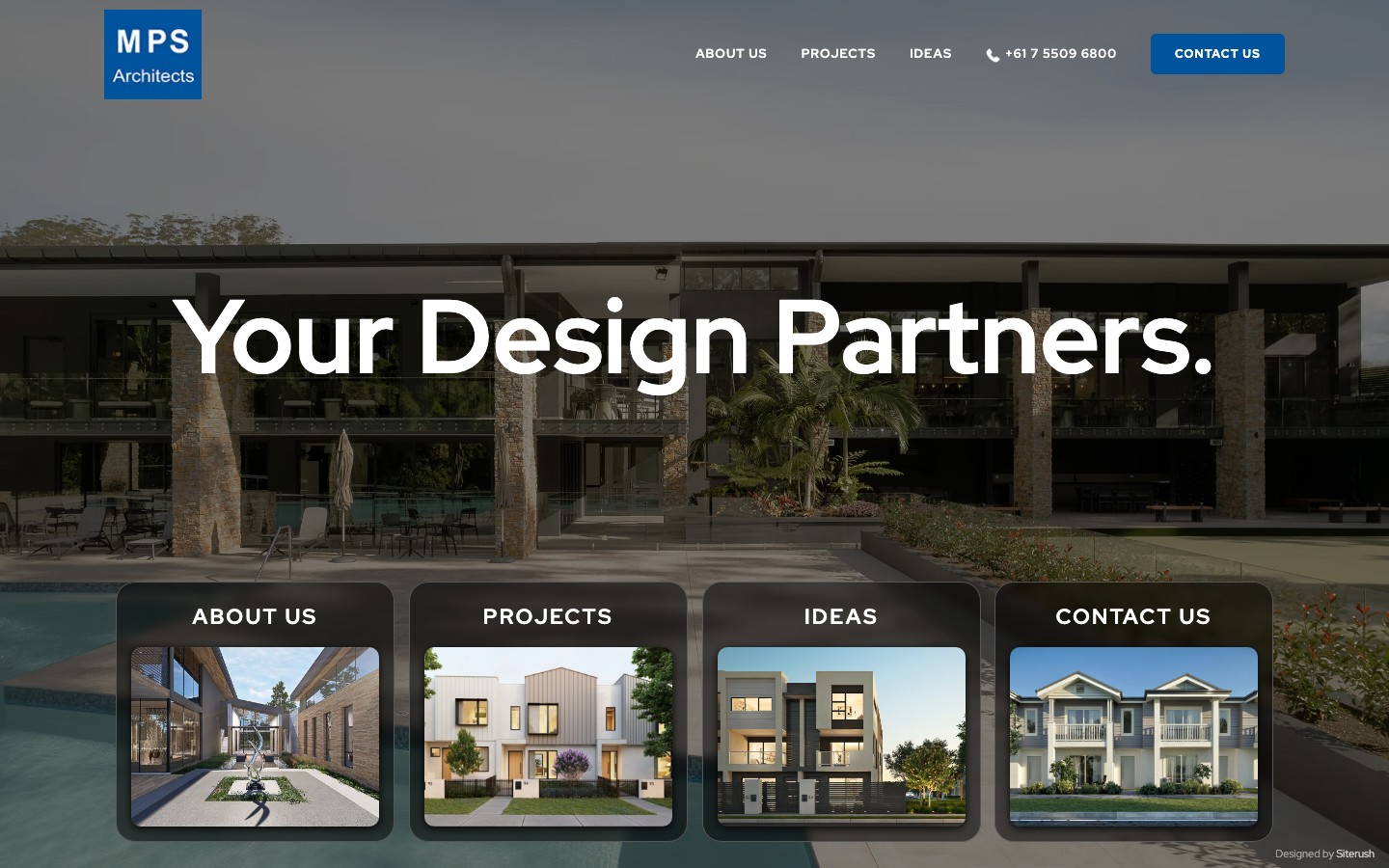
Archived homepage screenshot from before the redesign.
02 The design approach
The concept treats the portfolio the way procurement teams read it: as a register. A compact type-led hero sits over full-colour photography of recent stations. The home page leads with proof (the Yanchep brief changes), built work and the agencies that engaged the firm. The projects page turns all 25 projects into a sortable, filterable register with expandable spec sheets.
Across devices / 03
One concept.
Every screen.
Explore the desktop and mobile layouts.
Open either screen to see the detail.
Design details
Built around
the experience.
Inside the concept
- Sortable project register
- Sector filters and expandable project rows
- An alternative photographic portfolio view
Two ways to explore
The portfolio becomes a working register.
Sector filters and sorting help visitors compare the practice’s experience. Expandable rows retain project context, while the photograph view gives a second way to explore the same body of work.
Project context
Credit the role, not just the building.
The register displays the practice’s role alongside project information. This keeps collaboration and scope visible when visitors are evaluating experience across large public and private projects.
Search & clear answers
Easy to understand.
Easier to discover.
Answer engine optimisation (AEO) means making answers easy to find and understand. Generative engine optimisation (GEO) applies the same care to content that AI search tools may use when answering a question.
How this applies to MPS Architects
The concept connects its business identity with specific services and project information in readable page content. Descriptive section headings give the content a clear structure. These are useful foundations for search and answer-based discovery.
- What information is available beyond the photographs?
- The page includes readable sections such as Have a brief, a site or a tender to talk through?. These headings and their supporting copy explain the offer without asking readers or search tools to infer it from images alone.
Inside the website
Beyond the
first impression.
The About page, designed for MPS Architects.
A closer look
The details,
across screens.
The Projects page, presented at desktop and mobile widths.
Explore the concept
See how it
all connects.
Open the website concept to explore the layouts, navigation, and content for yourself.
Visit website concept (opens in a new tab)